

Weekend and Travel Functionality
THE FINISHING LAYER
This Is Where a Van Becomes Somewhere You Want to Be
A van can have a capable electrical system, a solid suspension, and a functional layout and still feel like an uncomfortable place to spend a weekend if the finishing details were not done carefully. Weekend and travel functionality is the layer of the build that most directly shapes the daily experience: whether the van is quiet on the highway or exhausting, warm enough in October that you sleep well, bright enough in the evening to actually cook dinner, and organized enough that every morning departure takes twenty minutes rather than an hour.
This covers cabinetry, roof vents, windows, insulation, flooring, window treatments, and interior finishing. These are the elements that do not appear on a component spec sheet but account for most of the difference between a van people use every weekend and one that sits in the driveway.
WHAT WE BUILD AND INSTALL
The Details That Define How Your Van Feels to Live In
CUSTOM CABINETRY
Custom cabinetry is one of the most visible and most used elements of any van interior. It is also where the quality difference between a thoughtfully built interior and a generic conversion is most immediately obvious. Cabinet doors that open and stay closed on rough roads. Drawers that operate smoothly and do not rattle on the highway. Storage solutions sized and organized for the gear your specific family or adventure setup actually carries.
We fabricate all cabinetry in-house at our Fife, Washington shop. Nothing is sourced from a generic supplier and force-fitted into a van that was not designed for it. Every cabinet, shelf, and storage unit is designed and built for your specific van, your travel style, and the specific dimensions and shapes of gear you need to store on every trip.
Materials are chosen for durability, cleanability, and an aesthetic that feels intentional rather than improvised. Hardware is specified for the vibration and movement demands of van travel, not for a kitchen in a house that never moves.
What we fabricate and install:
Full custom cabinet design and fabrication
Overhead storage cabinets with secure latching hardware
Under-bed storage with pull-out drawers or lift-up panels
Open shelving and display storage where the layout supports it
Cabinet door and drawer hardware rated for van travel
Surface materials chosen for durability and easy cleaning
Integrated charging and electrical access points within cabinetry
Finishing details that make the interior feel complete and cohesive
ROOF VENT FANS
A quality roof vent fan is one of the highest-return upgrades available for any van. On warm summer nights, it is what makes sleeping in the van genuinely comfortable rather than stuffy and hot. On cold winter mornings, it provides enough ventilation to manage condensation without losing all the heat your diesel heater worked to build overnight. Year-round, it gives you the airflow control that makes a sealed van space feel livable rather than confining.
Installation quality matters more than most clients initially realize. A roof penetration that is not done correctly is a water infiltration point on every rainy day for the life of the van. We take roof penetrations seriously because a van that develops a leak because of a poor install is a van with an expensive and avoidable problem. Every vent installation at our Fife, Washington shop is sealed and weatherproofed to handle Washington state's rainfall levels.
What we install:
Quality roof vent fan with multiple speed settings
Rain sensor functionality for automatic closing during showers
Proper roof penetration sealing and weatherproofing
Integration with the van's electrical system
Reversible airflow for exhaust or intake depending on conditions
Positioning chosen for optimal interior airflow patterns
WINDOW INSTALLATIONS
A van without windows beyond the front cab is a van that feels like a box. The right window installations bring natural light into the interior, give passengers a visual connection to the landscape around them, and provide ventilation options that make warm days genuinely comfortable without depending entirely on the roof vent.
Window placement is both a practical and a design decision. We consider natural light angles, privacy at campgrounds, ventilation flow through the interior, and the views your van will have when parked at the places you most commonly go. A window installed in the wrong position can create a glare problem at sunrise, a privacy problem at a busy campsite, or a missed opportunity for morning light in a space that could use it.
Every window we install is sealed and weatherproofed correctly the first time. In a place that gets Washington state's level of rainfall, there is no acceptable margin for a poor installation.
What we install:
Fixed and opening window options for all van platforms
Proper weatherproofing and sealing for Pacific Northwest conditions
Privacy glass options for campground and urban parking use
Ventilation-focused placement for interior airflow
Windows sized and positioned for natural light and view quality
Integration with window treatment and blackout systems
INSULATION
Insulation is not glamorous. It goes behind the walls, under the floor, and into the ceiling, where it is invisible once the build is complete. But it is one of the most consequential decisions in the entire van build, and it is one of the areas where corners are most commonly cut by shops that prioritize speed over quality.
Done right, insulation makes the van quiet on the highway, warm on a cold Washington morning, and genuinely comfortable through the full range of Pacific Northwest temperatures. Done poorly, it results in a van that is loud on the freeway, cold in November, prone to condensation buildup during Washington winters, and potentially developing moisture and mold issues inside the wall panels over time.
We choose the right materials for each area of the van. Thermal performance, vapor management, and acoustic properties all factor into the decision for specific locations within the structure. Every installation is done with Washington state's climate range in mind, not a generic specification that works adequately in a mild climate and underperforms in the real four-season Pacific Northwest.
What we install:
Thermal insulation appropriate to each area of the van structure
Acoustic insulation for highway and road noise reduction
Vapor barrier installation for Washington state's wet climate
Full coverage of ceiling, walls, and floor
Proper integration with windows, roof vents, and electrical penetrations
Material selection based on performance in Pacific Northwest conditions
FLOORING
Van flooring takes more abuse than almost any other interior surface. Muddy boots from trail days, wet gear dragged in from a rainy campsite, sand from a coast visit, and the daily wear of people moving in and out of a vehicle parked in real conditions. Flooring that is not chosen and installed for those realities will look worn and damaged long before the rest of the interior shows its age.
We install flooring that is chosen for genuine durability, appropriate texture for safe footing in wet conditions, easy cleaning, and an aesthetic that complements the rest of the interior without drawing attention to itself. The subfloor preparation underneath is handled with the same care, because a flooring installation is only as good as what it is sitting on.
What we install:
Durable, wipe-clean flooring appropriate for family and adventure travel
Proper subfloor preparation and leveling
Non-slip texture for safe footing in wet conditions
Flooring transitions and edge finishing
Material selection for comfort underfoot and long-term durability
WINDOW TREATMENTS AND BLACKOUT SYSTEMS
Window treatments do three things for a van traveler that cannot be achieved any other way. They provide privacy at busy campgrounds and urban overnight locations. They create genuine darkness for sleeping regardless of where the van is parked, which matters more than most people realize until they try to sleep in a lit parking area. And they add an additional layer of thermal insulation that makes a meaningful difference to interior comfort in Washington winters and warm PNW summers alike.
We install custom window coverings and blackout systems for every window in the van, sized and finished to fit correctly and look intentional rather than improvised. Magnetic attachment systems make installation and removal quick without damaging window frames. Materials provide full blackout where it matters and adequate privacy everywhere. Finished edges and proper sizing make the covers look like they belong in the van rather than like an afterthought.
What we install:
Custom blackout window covers for all van windows
Magnetic or clip attachment systems for quick installation and removal
Privacy covers for side and rear windows
Cab blackout system for front window separation
Thermal lining options for additional insulation in Washington winters
INTERIOR FINISHING AND DETAILING
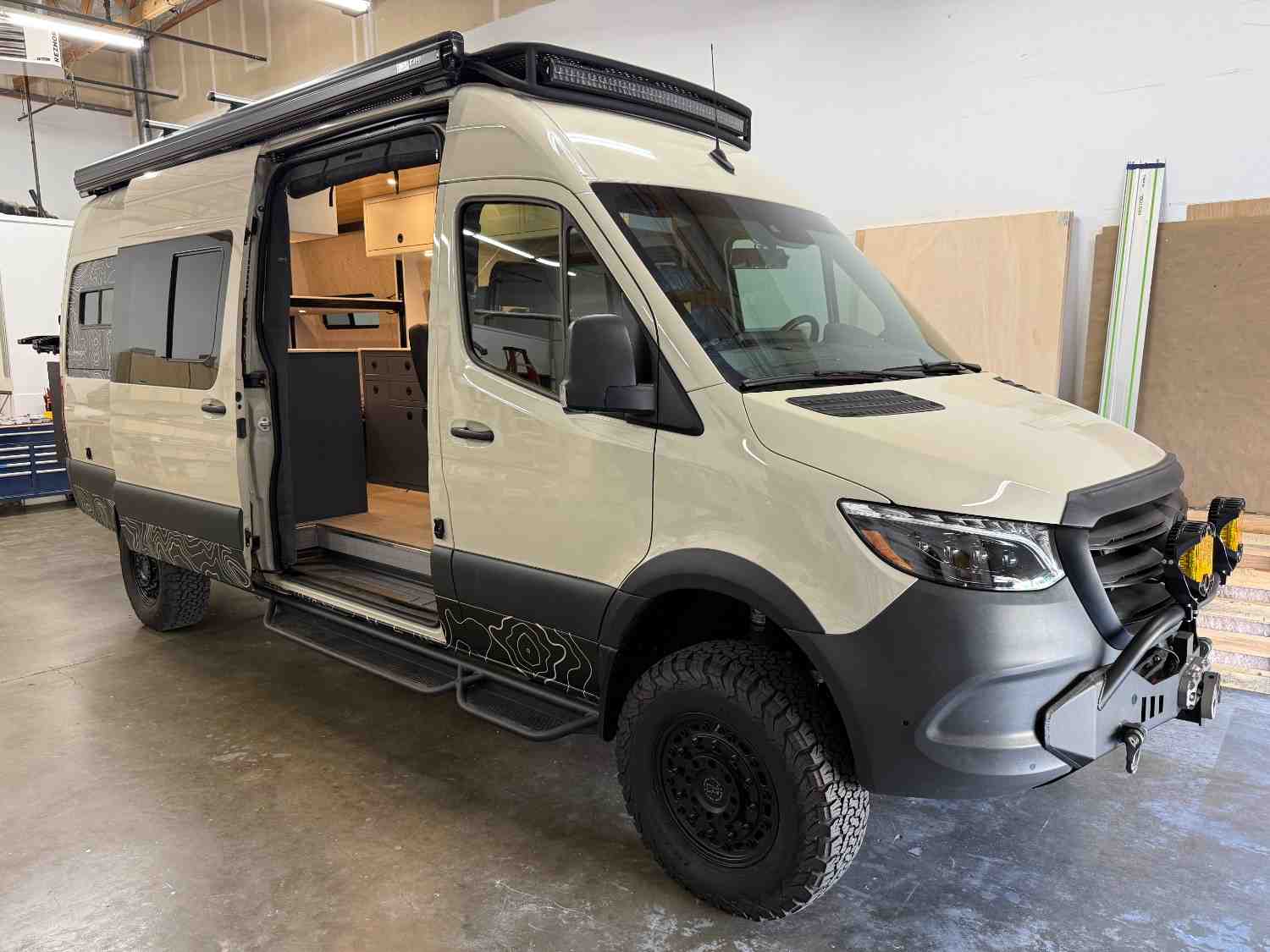
Interior finishing and detailing is the final stage of every Scallywagon build, and it is one that gets more attention at our Fife, Washington shop than at most van build facilities. This is where every edge is trimmed cleanly, every panel is fitted precisely, every cable is routed out of sight, and every detail that would stand out as incomplete or careless in a quality build is addressed before the van leaves our shop.
This is not a glamorous stage to write about, but clients notice it immediately when they see the finished van for the first time. A build that is meticulously finished feels fundamentally different from one that was rushed to completion, and that feeling persists every time they open the van door for the next decade of travel.
What we address:
Panel fitting and trim work throughout the interior
Cable and wire management for a clean, finished appearance
Edge finishing on all exposed surfaces
Hardware alignment and adjustment throughout
Final cleaning and interior detailing before delivery
Walkthrough inspection against the original build specification
WHO THIS IS FOR
Weekend and Travel Functionality Is for Anyone Who Wants to Actually Enjoy Their Van
This service is not exclusive to complete build clients. Many of the families and adventurers we work with already have vans with capable mechanical and electrical systems that simply never received the interior finishing work they deserved.
You have a van that is capable but not comfortable. Everything works mechanically and electrically, but the interior feels unfinished, the windows are absent or poorly installed, the cabinetry is basic or non-existent, and the insulation was never done properly. This service addresses all of that and transforms a capable van into one that is genuinely enjoyable to live in.
You are building from scratch and want the interior done right. For clients going through a complete Scallywagon build, weekend and travel functionality is the stage where the interior comes to life. Everything planned in the layout phase gets built and finished here, and it is often the part of the build clients are most excited to see come together.
You are upgrading a van that has some work done but is not complete. Many van owners have started a build themselves or had partial work done and want the finishing layer completed by people who take it seriously. We assess every van that comes into our Fife, Washington shop honestly and tell you what is worth building on and what needs to be addressed before we continue.
OUR STANDARD
What Every Weekend and Travel Functionality Install Has in Common

Everything fabricated in-house.
Every cabinet, panel, and storage solution is designed and built inside our Fife, Washington shop by our own team. Nothing is sourced generically and installed without being designed specifically for your van and your travel needs.
Every cabinet, panel, and storage solution is designed and built inside our Fife, Washington shop by our own team. Nothing is sourced generically and installed without being designed specifically for your van and your travel needs across Washington state and the PNW.

Materials chosen for the Pacific Northwest.
Washington state's climate, including its rainfall, temperature range, and the dust and mud of backcountry trails, informs every material choice we make. We do not specify materials that look good in mild conditions and underperform in the real Pacific Northwest climate that our clients actually travel in.
The climate of Washington state, the rain, the temperature range, the dust and mud of PNW trails, all inform every material choice we make. We do not specify materials that look good in mild conditions and fail in the real Pacific Northwest climate that our clients actually travel in.

Finished to be used, not just photographed.
A Scallywagon interior is designed for years of real use by real families and adventurers. The finishing standard reflects that. Hardware that holds up. Surfaces that clean. Edges that do not snag or wear. A build that looks as good in two years of regular travel as it did on delivery day.
A Scallywagon interior is designed for years of real use by real families and adventurers across Washington state. The finishing standard reflects that. Hardware that holds up. Surfaces that clean. Edges that do not snag or wear. A build that looks as good in two years of regular travel as it did on delivery day.

Installed with attention to every detail.
Proper weatherproofing on every exterior penetration. Clean routing on every wire and cable. Precisely fitted panels on every wall surface. The details that are easy to rush and impossible to un-see once you know they are there.
Proper weatherproofing on every exterior penetration. Clean routing on every wire and cable. Precisely fitted panels on every wall surface. The details that are easy to rush and impossible to un-see once you know they are there.
Real Builds. Real Families. Real Adventures.
Here's what customers who've camped, overlanded, and traveled in their Scallywagon builds have to say.

READY TO GET STARTED?
Tell Us What Your Van Needs to Feel Complete
Fill out the form below and our Fife, Washington team will be in touch to schedule your free consultation.
READY TO GET STARTED?
Tell Us What Your Van Needs to Feel Complete
Fill out the form below and our Fife, Washington team will be in touch to schedule your free consultation. We serve van owners from Seattle, Tacoma, Bellevue, Renton, Kent, and all across Washington state and the Pacific Northwest.
Frequently Asked Questions
Can these upgrades be added to a van I already own?
Yes. Weekend and travel functionality upgrades are among the most commonly requested standalone services we provide at our Fife, Washington shop. Clients bring their existing vans to us regularly for cabinetry, window installations, roof vents, insulation, and finishing work. We assess the current state of your van and give you an honest recommendation about what will make the most difference for how you travel.
Do I need all of these elements or can I choose specific ones?
You can absolutely choose specific elements. Some clients need cabinetry and flooring. Others need windows and a roof vent. Others need insulation work and window treatments. We work with every client to identify which elements will have the biggest impact on their specific van and travel situation and provide a clear quote for exactly the work they want done. There is no minimum scope requirement.
How important is proper insulation for van travel in Washington state?
It is genuinely one of the most impactful investments in the entire build, even though it is invisible once installed. Washington state has cold winters, warm summers, and a wet climate that creates condensation challenges in a poorly insulated van. Proper insulation makes the van quieter, warmer in winter, cooler in summer, and significantly less prone to the moisture issues that damage interior surfaces over time. Clients who have traveled in poorly insulated vans and then in a properly insulated one describe the difference as substantial.
What window options work best for van travel in the Pacific Northwest?
The best window choice depends on your priorities and how you typically park and travel. For privacy at campgrounds and overnight locations, slightly tinted or privacy glass is a meaningful advantage. For maximum light in Washington's often-overcast conditions, clear glass maximizes natural light on grey days. Fixed windows are simpler and less prone to leaks in rainy climates. Opening windows add ventilation flexibility. We discuss these tradeoffs with every client during the consultation and help you find the right balance for how you travel.
How long does a weekend and travel functionality installation take?
Timeline depends on scope. A single element like a roof vent or window installation typically takes one to three business days. A more comprehensive finishing package including cabinetry, insulation, windows, and flooring typically takes three to six weeks depending on the amount of custom fabrication involved and our current schedule. We give every client a clear, honest timeline during the consultation.
Copyright 2026. Scallywagon Adventure Vans. All Rights Reserved.