

Off-Grid Capability
Stay Out Longer. Go Further. Depend on Less.
Real Off-Grid Capability Is Not One System. It Is All of Them Working Together.
At Scallywagon, off-grid capability is one of the areas we invest the most thought into, because it is the one that determines how far you can actually go and how long you can actually stay. For people who want to explore the most remote areas without planning every night around a power hookup or a campground with facilities, genuine off-grid capability changes everything about how you travel.
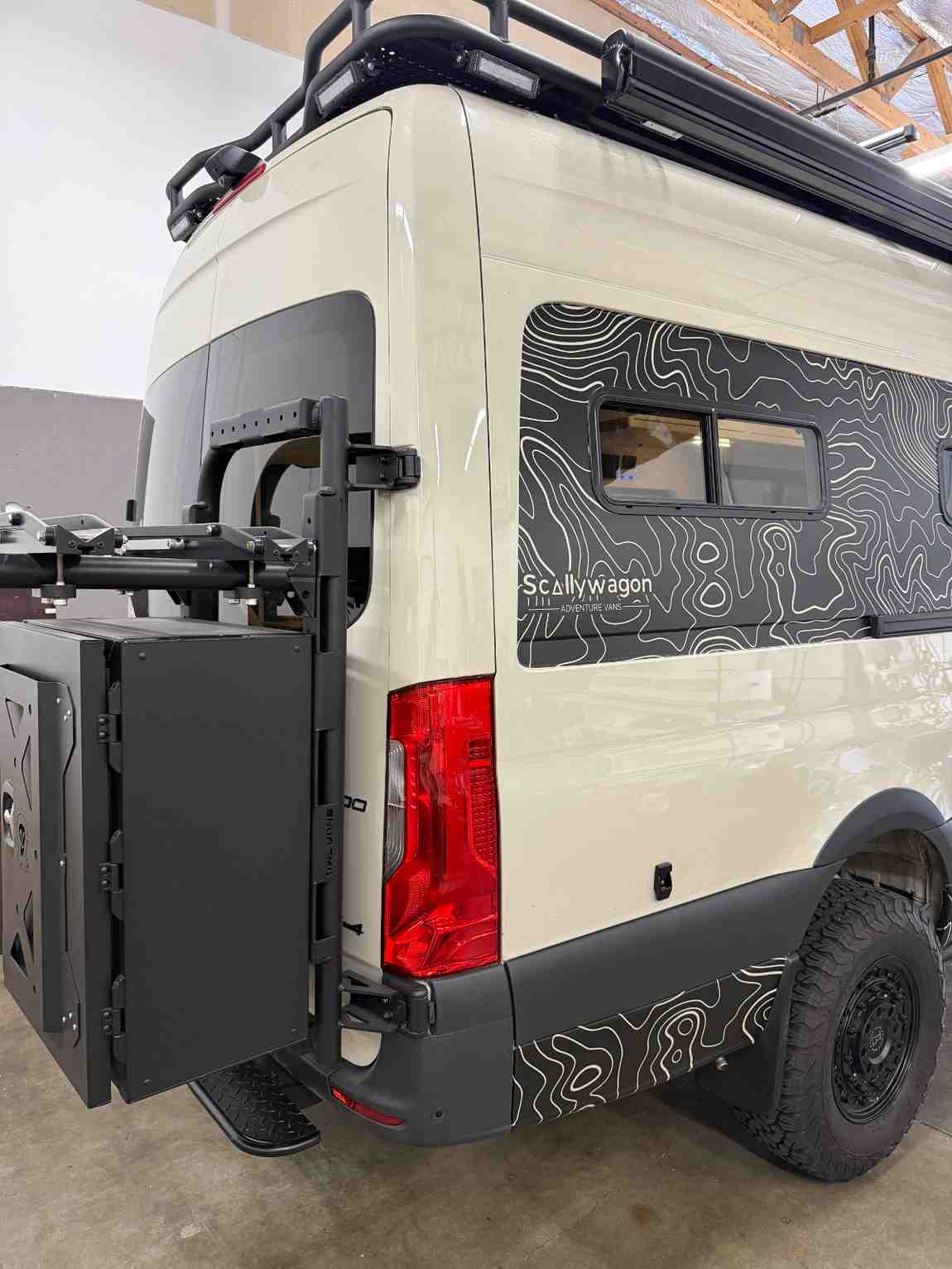
WHAT IT ACTUALLY MEANS
What Genuine Off-Grid Capability Actually Looks Like
Off-grid capability means different things to different people. For some families, it means being able to spend a long weekend at a primitive campsite without running out of power or warmth. For adventurers, it means ten days deep in backcountry with no need for a campground, a hookup, or a fuel stop for the heater.
Both of those are legitimate goals, and both are achievable with the right systems. What they have in common is this: genuine off-grid capability requires power you can depend on, water you can access, and heat that works reliably through a Washington state night regardless of what the temperature does.
When all three of those systems are designed and installed together as a complete off-grid solution, the result is a van that gives you real freedom. Not the idea of freedom with an asterisk attached. Actual freedom to go where you want, stay as long as you want, and come back when you are ready.
OFF-GRID SYSTEMS
The Systems That Make Off-Grid Travel Possible Across Washington State
Every off-grid capability installation at our Fife, Washington shop covers the four systems that determine how self-sufficient your van truly is. Here is how we approach each one.
POWER
The foundation on which everything else depends.
Off-grid power for a van is not a simple calculation. Washington state has seasons that dramatically affect solar input, temperatures that increase heating demand and electrical load, and terrain that means you are not always driving long distances between campsites to keep your alternator charging. A proper off-grid power system has to account for all of those realities, not just perform well on a sunny day in July.
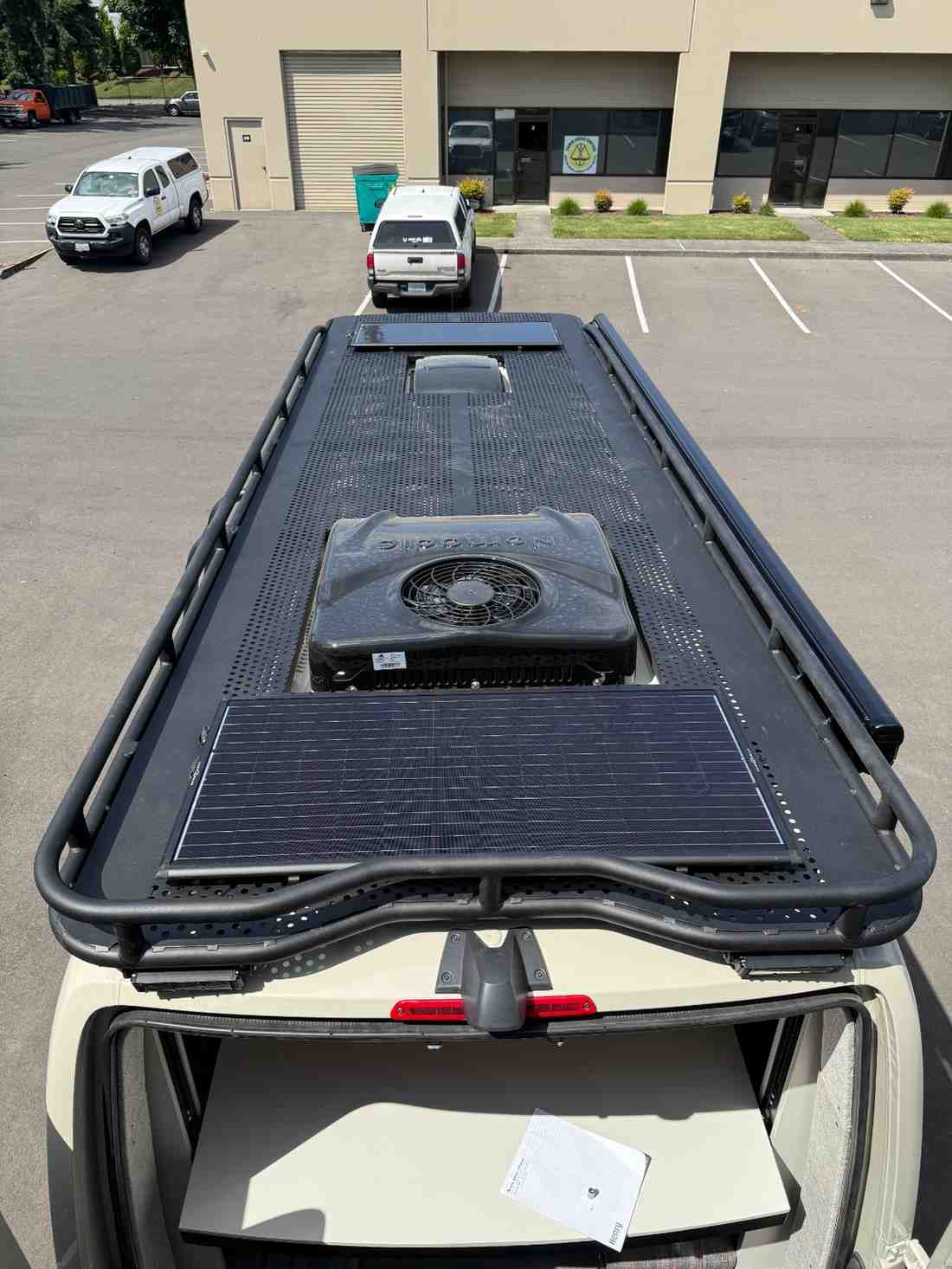
We build every Scallywagon off-grid power system around Victron Energy components: lithium LiFePO4 battery banks sized to your actual daily consumption, roof-mounted solar panels calibrated for Washington state sun exposure across all four seasons, Victron inverter/charger units for shore power access when it is available, and Victron DC-DC alternator charging to supplement solar on overcast days and during shorter winter daylight hours.
For anyone who spends serious time off-grid, the power system is the most critical investment in the entire build. We size it correctly, install it cleanly, and configure it to perform in real-world Pacific Northwest conditions, not an idealized version of them.
What we install:
Lithium LiFePO4 battery banks sized to your load and travel pattern
Roof-mounted solar array sized for Washington state seasonal conditions
Victron MultiPlus inverter/charger
Victron SmartSolar MPPT charge controllers
Victron Orion-Tr Smart DC-DC alternator charger
Shore power inlet for campground use when available
Victron SmartShunt battery monitoring
VictronConnect app setup and configuration
120V AC outlets, USB ports, and 12V outlets throughout
WATER
Fresh water access is one of the most practical and most overlooked elements of genuine off-grid capability. A van without an onboard water system means driving to fill a jug, rationing carefully, or camping where facilities are available. None of those options belong in a truly self-sufficient off-grid build.
We install complete fresh water systems in Scallywagon builds: properly sized tanks for extended off-grid travel, 12V demand pumps that deliver consistent water pressure, filter systems for drinking water quality, and thoughtfully located fixtures that work in the real interior space of your van.
Grey water management is handled with equal care, with appropriate containment and disposal options that respect the environments you spend time in.
An onboard water system is the difference between a van you can truly live out of and a van you are constantly planning around.
What we install:
Fresh water tank sized to your intended off-grid duration
12V demand water pump
Water filter and purification system
Sink installation with hot and cold capability where specified
Grey water tank and containment system
Drain plumbing and outdoor access fittings
Outdoor shower hookup where specified
Tank level monitoring
HEATING
Year-round comfort across Washington state's four seasons.
Washington state has winters. Real ones. Cold, wet, and dark from October through March. Any van that is not properly heated for those conditions is a van that sits unused for six months of the year. That is not the kind of freedom we build for.
We install Espar diesel heater systems and Timberline hydronic heating systems in our Fife, Washington shop — two of the most trusted and proven names in van heating for serious travelers. Both systems run on diesel fuel, which means you are not carrying separate fuel sources and not depleting your battery bank to stay warm the way electric heating systems do. Both are quiet enough for sleeping, efficient enough for extended use, and reliable enough for Washington state's backcountry in any season.
Properly installed diesel heating is one of the most transformative upgrades available for any van. Families who want to camp through Washington fall, adventurers heading into the mountains in November, couples who refuse to let the weather dictate their travel schedule: all of them benefit enormously from a quality diesel heating system installed by people who know these systems inside and out.
What we install:
Espar diesel heater systems
Timberline hydronic heating systems
Fuel line integration with the vehicle's existing tank
Proper combustion air intake and exhaust routing
Interior heat distribution ducting where specified
Thermostat and controller installation
Annual maintenance guidance and support
VENTILATION AND CLIMATE MANAGEMENT
Comfort across all four seasons.
Off-grid capability is not just about staying warm in Washington winters. It is about staying comfortable across the full range of conditions: warm, sunny summers, the unpredictable shoulder seasons, and the cold, wet winters that define a real Washington state year.
Roof vent fans provide airflow and passive cooling on warm nights without draining your battery bank. Proper insulation throughout the van maintains comfortable interior temperatures in both directions, keeping heat in during Washington winters and reducing heat gain during warmer months. Condensation management, which is especially important in the wet Pacific Northwest climate, is built into the insulation and ventilation design rather than treated as an afterthought.
For clients who spend time in their van across all four seasons, ventilation and climate management are what make the entire system work comfortably year-round rather than just during the seasons when it is easy.
What we install:
Roof vent fan installation
Thermal and acoustic insulation throughout
Vapor barrier and condensation management
Window treatment and blackout installation
Ventilation design for Washington state's wet climate
BUILT FOR YOUR TRAVEL
Off-Grid Capability Looks Different for Every Client
Not every off-grid build needs to be the most capable version possible, and not every client has the same goals.
The Weekend Family Families who take regular weekend trips need off-grid capability that is reliable, simple to manage, and sized for two to four days at a time. For this travel style, we typically recommend a 200Ah lithium system with 300 watts of solar, a quality diesel heater, and a moderate fresh water tank. Enough to be genuinely self-sufficient for a long weekend without over-building for trips that will not demand it.
The Extended Adventurer Solo adventurers and couples who take week-long or multi-week trips into backcountry need a more robust system. Larger battery banks, more solar capacity, higher-output alternator charging, bigger water tanks, and the full Espar or Timberline heating treatment. These clients need to know their systems can handle whatever conditions they encounter for extended periods without intervention.
The Year-Round Traveler Clients who use their van in every season need an off-grid system designed explicitly for the reduced solar conditions and increased heating demands of Washington state winters. This means sizing solar for winter output rather than summer peaks, ensuring robust alternator charging for the shorter days and longer drives of winter travel, and installing a heating system that is reliable and efficient at the temperatures Washington state actually reaches.
OUR STANDARD
What Every Off-Grid System from Our Fife, Washington Shop Has in Common

Systems designed together, not assembled separately.
Power, water, heat, and ventilation are planned as a complete system from the first consultation. Every component is chosen with the other systems in mind so that the finished off-grid build works as one cohesive, reliable platform for every trip.
Power, water, heat, and ventilation are planned as a complete system from the first consultation. Every component is chosen with the other systems in mind so that the finished off-grid build works as one cohesive, reliable platform for travel across Washington state and the Pacific Northwest.

Sized for your actual travel, not a generic spec.
Every off-grid system we build is sized based on how you specifically travel: how long your trips run, how much power you consume, how much water you use, and what the heating demands of your typical destinations look like. Generic packages applied without that context often result in systems that are either undersized for real use or overspent on capacity that was never needed.
Every off-grid system we build is sized based on how you specifically travel across the PNW: how long your trips run, how much power you consume, how much water you use, and what the heating demands of your typical Washington state destinations look like. Generic packages applied without that context often result in systems that are either undersized for real use or overspent on capacity that was never needed.

Components we stand behind, every time.
Victron for power. Espar or Timberline for heating. Quality tanks and pumps for water. The same brands in every off-grid system we install, regardless of the scope of the project.
Victron for power. Espar or Timberline for heating. Quality tanks and pumps for water. The same brands in every off-grid system we install, regardless of the scope of the project or the client's location across Washington state and the PNW.

Installed with the same care as a complete build.
Whether the off-grid system is part of a complete Scallywagon van build or an upgrade to an existing van, the installation standard never changes. Clean wiring, proper routing, secure mounting, and thorough testing before the van leaves our Fife, WA shop.
Whether the off-grid system is part of a complete Scallywagon van build or an upgrade to an existing van for a client from Renton, Kent, or anywhere across Washington state, the installation standard never changes. Clean wiring, proper routing, secure mounting, and thorough testing before the van leaves our Fife, WA shop.
Real Builds. Real Families. Real Adventures.
Here's what customers who've camped, overlanded, and traveled in their Scallywagon builds have to say.

READY TO GO OFF-GRID?
Tell Us About Your Off-Grid Goals
Fill out the form below and our Fife, Washington team will be in touch to schedule your free consultation.
READY TO GO OFF-GRID?
Tell Us About Your Off-Grid Goals
Fill out the form below and our Fife, Washington team will be in touch to schedule your free consultation. We serve van owners from Seattle, Tacoma, Bellevue, Renton, Kent, and all across Washington state and the Pacific Northwest.
Frequently Asked Questions
How long can a properly built off-grid van last without any external power source?
It depends on the system size and your daily power consumption, but a well-designed off-grid system can comfortably support three to seven days of self-sufficient use without solar input or alternator charging. With a good solar resource and reasonable power consumption, the same system can be genuinely indefinite in terms of power autonomy. We calculate your specific autonomy during the planning phase so every client knows exactly what their system can handle before they head into the backcountry.
How does off-grid capability hold up during Washington state winters?
Washington winters reduce solar input significantly, which is why we design off-grid systems with the full seasonal range in mind rather than just peak summer performance. The key is combining appropriately sized solar with robust alternator charging so that driving between destinations contributes meaningfully to your battery bank on overcast days. Diesel heating systems from Espar and Timberline are designed for cold-weather performance and do not rely on your electrical system for heat output, which means your battery bank is not being drained by heating demands on the coldest Washington nights.
What is the difference between Espar and Timberline heating systems?
Both are proven diesel heating systems that we install and trust from our Fife, Washington shop. Espar is a combustion-style diesel heater that heats air directly and distributes it through the van interior. It is highly reliable, well-supported, and one of the most common choices for serious van travelers. Timberline is a hydronic system that heats coolant and distributes warmth through radiant heat exchangers. Hydronic systems tend to provide more even heat distribution and are very quiet, which families with kids sleeping in the van particularly appreciate. We help every client choose the right system for their specific build and travel style during the consultation.
Do I need a separate water heater for my fresh water system?
Not necessarily, though it depends on your use case and preferences. Many clients are comfortable with cold-water-only systems for camping use. For clients who want hot water for dishes, washing up, or an outdoor shower, we can integrate a small diesel or propane water heater into the fresh water system. We discuss water heating options during the planning phase based on how you travel and what your fresh water use actually looks like on a typical trip.
Can off-grid systems be added to a van that already has a partial build?
Yes. We work with existing van builds regularly and can add off-grid systems to vans that were built without them or built with inadequate systems that are not performing as needed. We assess every existing van that comes into our Fife, Washington shop and give clients an honest evaluation of what can be integrated with what is already there and what may need to be replaced or relocated to support a proper off-grid installation.
Copyright 2026. Scallywagon Adventure Vans. All Rights Reserved.