

Electrical Systems
THE FOUNDATION OF THE BUILD
The Electrical System Shapes Everything Else in the Van
The refrigerator, the lighting, the diesel heater controls, the device charging, and in many configurations the heating system itself all depend on the electrical system working correctly. A system that is undersized for your actual power needs will leave you watching the battery gauge on day two of a four-day trip. A system that is poorly wired will create problems that are frustrating to diagnose and expensive to fix in the field.
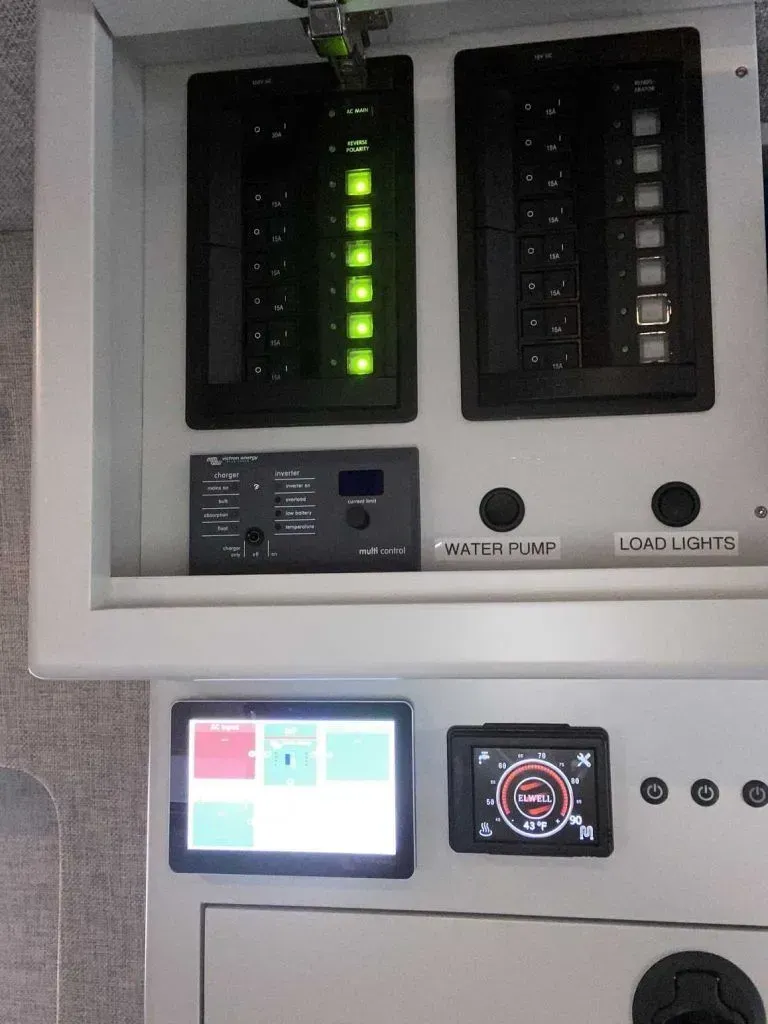
We build every electrical system around Victron Energy components, and we size every system around how a specific person or family actually travels, not a default package applied to every van that comes through the shop.
WHY WE BUILD WITH VICTRON
Why Every Scallywagon Electrical System Uses Victron Energy
After evaluating and installing electrical systems across a wide range of van builds, Victron Energy is the platform we continue to build with. The reasons are practical.
Victron's components, including inverter/chargers, solar charge controllers, battery monitors, and DC-DC chargers, are used by professional installers, serious overlanders, and marine electricians around the world. The reliability record is long. The support network is extensive. When something needs attention years from now, Victron's parts availability and documentation make that service work significantly faster and less expensive than alternatives.
The monitoring side is equally important. Victron's VictronConnect app gives you a clear, real-time picture of your battery state, solar input, and power consumption from your phone. For anyone who depends on their electrical system for extended off-grid travel, knowing exactly where your power stands removes the guesswork that leads to bad decisions in remote locations.
WHAT WE BUILD
What Goes Into a Scallywagon Electrical System
Every system we design and install is a complete, integrated solution. Here is what that means in practice.
BATTERY BANK
Lithium iron phosphate (LiFePO4) is what we build every battery bank around. Compared to AGM batteries, lithium provides more usable capacity from the same physical size, charges faster, lasts significantly longer through charge cycles, and weighs considerably less. That weight difference is meaningful in a loaded van.
The most common sizing mistake in van electrical builds is defaulting to a round number rather than calculating actual daily load. We work through every device and system you plan to run, estimate realistic daily usage, and size the battery bank to give you comfortable autonomy without paying for capacity you do not need.
A solo traveler running a 12V compressor fridge, a laptop, interior lighting, and a diesel heater controller might need 150Ah. A family running a larger fridge, multiple device charging needs, more interior lighting, and an inverter for AC appliances will typically need 300Ah or more, along with a charging setup that can keep up with that consumption.
What we install:
Lithium LiFePO4 battery banks from 100Ah to 400Ah and beyond, sized to your load calculation
Battery management system integration
Properly rated fusing and disconnect hardware
Organized battery compartment installation
Thermal considerations for year-round use in Washington's climate range
SOLAR ARRAY
Solar is the primary charging source for most van electrical systems. It is also the area where system designs most often fall short, because too many installations are sized for peak summer sun without accounting for the rest of the year.
Washington state's fall and winter months bring significantly reduced solar irradiance: shorter days, lower sun angles, and frequent overcast conditions. A system designed only for July will leave you chronically undercharged from October through March. Every solar design we build accounts for this seasonal variation and includes enough supplemental charging capacity to keep the battery bank healthy through winter travel.
We use rigid roof-mounted panels rated for the physical demands of vehicle use, including road vibration, temperature swings, and the occasional branch or debris encounter on forest tracks. Every roof penetration is sealed and weatherproofed for Washington's rainfall levels.
What we install:
Roof-mounted rigid solar panels sized to your load calculation and seasonal conditions
Victron SmartSolar MPPT charge controllers
Proper roof penetration sealing and weatherproofing
Panel wiring and junction box installation
Tilt-mount options where low winter sun angles require additional array output
INVERTER/CHARGER
The Victron MultiPlus or Quattro inverter/charger serves two functions: it converts DC battery power to 120V AC for standard household devices, and it manages shore power charging when you are plugged into a campground outlet.
For anyone who wants to run a laptop, charge camera batteries, use a standard coffee maker, or power other AC devices from the van, the inverter/charger is what makes that possible without a generator. We size the inverter to your actual AC load and install it integrated with the battery bank and monitoring systems.
What we install:
Victron MultiPlus or Quattro inverter/charger
Shore power inlet installation and wiring
Automatic transfer switch integration
120V AC outlets throughout the interior
Full integration with Victron system monitoring
DC-DC ALTERNATOR CHARGING
Solar works well when the sun is out. Driving between campsites on grey November days in Washington is a different situation. DC-DC charging from the van's alternator fills that gap, converting alternator output to a proper charging profile for lithium batteries. A direct connection cannot do this safely, which is why a dedicated DC-DC charger matters.
For anyone who covers meaningful miles between campsites, alternator charging contributes significantly to overall system performance. A few hours of highway driving can meaningfully recover battery capacity that overcast skies were unable to restore through solar alone.
What we install:
Victron Orion-Tr Smart DC-DC charger, sized to your battery bank and driving patterns
Proper wiring and fusing from the vehicle's charging circuit
Integration with overall system monitoring
SYSTEM MONITORING
A van electrical system without monitoring is like driving without a fuel gauge. You can manage for a while, but eventually you will make the wrong call at the wrong time and run out of power in a location that makes the problem much harder to solve.
Every system we build includes Victron SmartShunt battery monitoring and is configured with the VictronConnect app for real-time visibility from your phone. You can check battery state, review solar input, and see power consumption history without opening any panels or reading physical gauges. For builds with a Cerbo GX, the VRM portal extends that visibility to a web interface accessible from anywhere with a connection.
What we install:
Victron SmartShunt battery monitor
Victron GX display device or Cerbo GX where specified
VictronConnect app configuration and setup on your device
Full system labeling and circuit documentation
DISTRIBUTION AND WIRING
Wiring quality is what determines whether an electrical system performs reliably for years or starts creating problems within a season. Every wire in a Scallywagon electrical install is sized correctly for its load, protected with appropriately rated fuses or breakers, routed cleanly through the van's structure, and labeled for identification and serviceability.
We organize all circuits through a fused distribution panel. This matters not just for build quality but for any service work years down the road. A clearly organized, well-labeled electrical system is far faster and less expensive to service than one that requires tracing unlabeled wires through wall panels to diagnose a single problem.
What we install:
Properly sized wiring throughout, matched to each circuit's load
Fused distribution panel with individually protected circuits
USB and 12V charging outlets in appropriate interior locations
Clean, labeled wiring runs with proper strain relief
Circuit documentation for the entire installed system
HOW WE SIZE YOUR SYSTEM
Every System Is Sized Around How You Actually Travel
The most common mistake in van electrical builds is applying a standard package without calculating actual power consumption. A 200Ah battery bank with 200 watts of solar is frequently cited as a starting point, but whether that is right for you depends entirely on what you run, how long you run it, and when you travel.
We work through a complete load calculation before specifying any component. Every device and system you plan to use goes on the list. We estimate realistic daily runtime for each one, calculate daily amp-hour consumption, account for charging inefficiencies, and apply a buffer that gives you comfortable real-world autonomy.
The output looks different for every client. A couple doing two-week summer road trips with minimal AC power needs might land on a 200Ah system with 300 watts of solar. A family of four traveling year-round across Washington, running a large compressor fridge, charging multiple devices, using an inverter regularly, and contending with months of limited sun, might need 400Ah and a robust alternator charging setup just to maintain comfortable autonomy. The right system is the one that fits your actual travel life.
COMPLETE BUILDS AND UPGRADES
Electrical Work for New Builds and Existing Vans
If your current system is undersized, poorly wired, or simply not performing the way it should, we assess it honestly and tell you what is worth keeping and what needs to be replaced. We do not add capacity to a system that has underlying wiring problems without addressing those problems first.

For Complete Builds
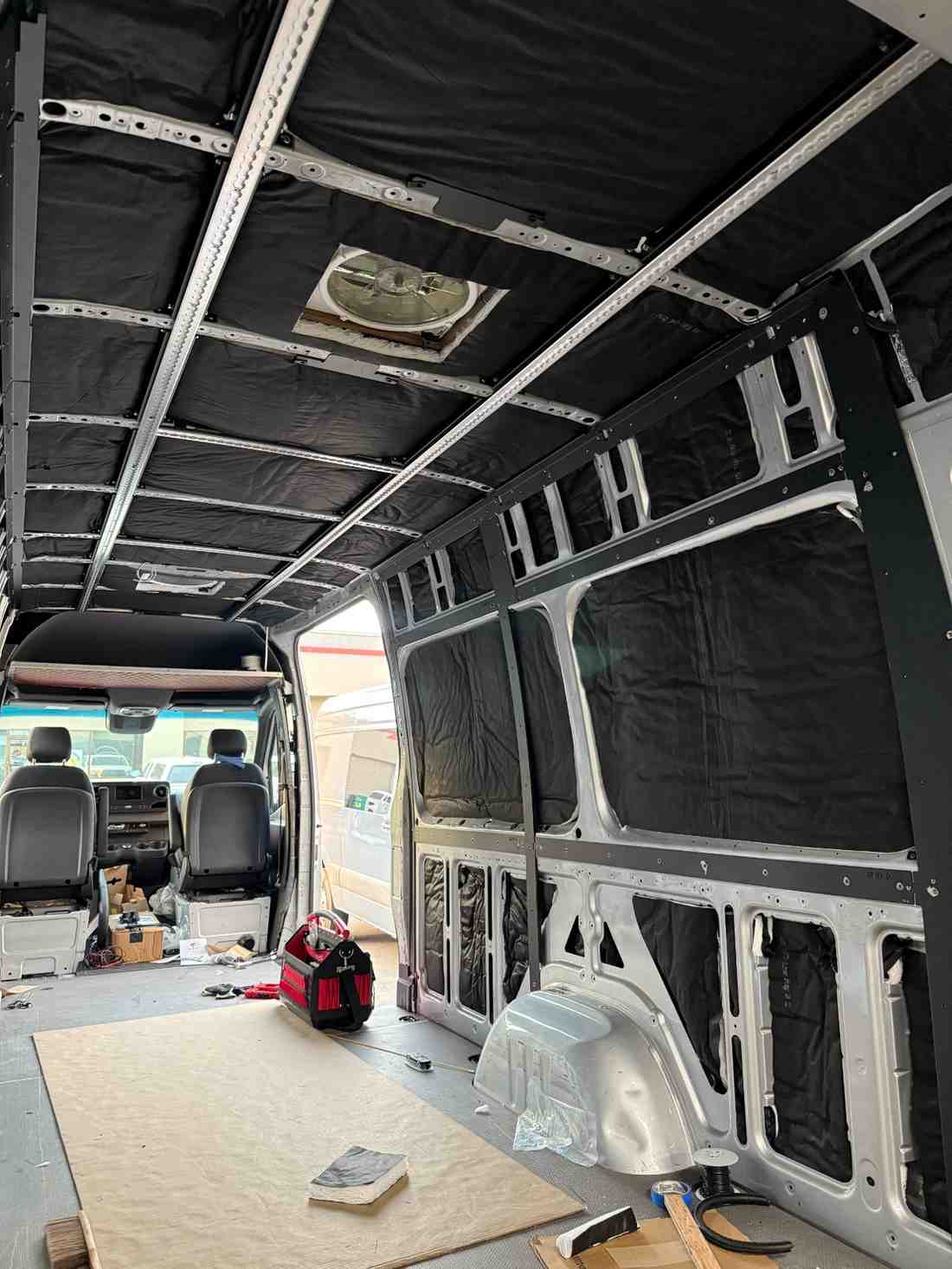
When the electrical system is part of a full Scallywagon build, it is designed and installed as an integrated part of the overall plan from the beginning. Wiring routes are established before walls go up. The battery compartment location is designed into the cabinetry. Solar roof penetrations are waterproofed as part of the roof work. Every system integrates cleanly because everything was planned together.
When the electrical system is part of a complete Scallywagon build, it is designed and installed as part of the overall system plan from day one. Wiring routes are established before the walls go up. Battery compartment location is built into the cabinetry design. Solar penetrations are waterproofed as part of the roof work. Everything integrates cleanly because it was all planned together.

For Existing Vans
We regularly install and upgrade electrical systems in vans that are already built or partially built. The approach is the same: a proper load calculation, Victron components, clean wiring, and organized documentation, executed within the existing structure of the van. Clients with existing vans come to us specifically for electrical work because they want a system designed correctly by people who know the Victron platform thoroughly.
When we install an electrical system in a van that is already built or partially built, we assess the existing structure and work within it to deliver the cleanest, most capable installation the space allows. Clients from Renton, Kent, and across Washington state with existing vans regularly come to us specifically for electrical upgrades because they want the system done right, by people who know Victron inside and out.
Real Builds. Real Families. Real Adventures.
Here's what customers who've camped, overlanded, and traveled in their Scallywagon builds have to say.

READY TO BUILD YOUR SYSTEM?
Tell Us About Your Electrical Needs
Fill out the form below, and our Fife, Washington team will be in touch to schedule your free electrical consultation.
READY TO BUILD YOUR SYSTEM?
Tell Us About Your Electrical Needs
Fill out the form below, and our Fife, Washington team will be in touch to schedule your free electrical consultation. We serve van owners from Seattle, Tacoma, Bellevue, Renton, Kent, and all across Washington state and the Pacific Northwest.
Frequently Asked Questions
How much does a van electrical system installation cost?
Cost varies based on battery bank size, solar array wattage, whether an inverter/charger is included, and the complexity of the installation in your specific van. A basic off-grid system with a 100Ah lithium bank, 200W solar, and a DC-DC charger typically starts around $3,500 to $5,000 installed. A full-scale family system with 300 to 400Ah lithium, 400W solar, a Victron inverter/charger, and shore power capability typically ranges from $7,000 to $12,000 installed. We provide a detailed, itemized quote before any work begins.
Do you install systems using brands other than Victron?
We build exclusively with Victron Energy components. This is a deliberate decision based on years of installing and observing electrical systems across a range of van builds. Victron's reliability, serviceability, support network, and monitoring capabilities are not matched by other brands at this level. We are not willing to install a system we cannot fully stand behind, and Victron is the platform we trust.
Can you upgrade or expand an electrical system that is already installed in my van?
Yes. We can upgrade undersized battery banks, add solar capacity, install an inverter/charger, or redesign a system that is not performing correctly. We assess every existing system honestly: what is worth keeping, what needs to be replaced, and whether there are underlying issues that need to be addressed before adding capacity. We do not build on top of a problematic foundation without fixing the foundation first.
How does solar charging actually perform in Washington state during winter?
Honestly, not as well as summer, and your system needs to be designed with that in mind. From roughly November through February, Washington sees significantly reduced solar irradiance: shorter days, lower sun angles, and frequent overcast conditions. A system sized only for summer performance will chronically underperform in winter. We account for this in every design by sizing the solar array conservatively for annual conditions and ensuring the DC-DC alternator charger is robust enough to meaningfully recover battery capacity during driving. If you travel year-round, your system needs to work year-round.
Can I monitor my system remotely?
Yes. Every Victron system we install is configured with the VictronConnect app for real-time monitoring of battery state, solar input, and power consumption from your phone. Builds with a Victron Cerbo GX also have access to the VRM portal, which provides complete system visibility from any web browser. For clients who want to stay on top of their power use without needing technical expertise, the Victron monitoring ecosystem makes that genuinely straightforward.
Copyright 2026. Scallywagon Adventure Vans. All Rights Reserved.